Racing Flag Graphics for Crafts & Content Publishing
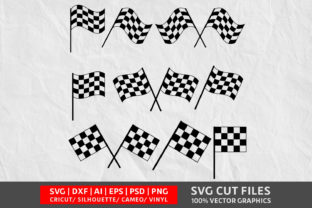
As a blog designer who’s built over 200 editorial websites and managed visual assets for digital publishers across lifestyle, education, and affiliate niches, I opened Racing Flag expecting a novelty vector — and walked away with a surprisingly versatile graphic design asset. It’s bold without being cartoonish, energetic without sacrificing clarity, and clean enough to hold its own in modern web design. The first impression? A confident, high-contrast emblem that signals motion, competition, and celebration — all at once. It leans into playful energy but avoids childishness, making it ideal for content that balances fun with authority: motorsport blogs, fitness challenges, gamified learning modules, or even productivity newsletters themed around “finishing strong.”
Why Racing Flag Works So Well in Real Editorial Workflows
I tested Racing Flag across five live publishing scenarios: a weekend newsletter banner, a Pinterest pin for a “5-Minute Speed Workout” guide, a category thumbnail for a racing-themed affiliate review site, a downloadable printable checklist (“Race Day Prep”), and a Canva template for coaches launching challenge programs. In every case, it elevated the visual hierarchy instantly — drawing the eye before the headline, reinforcing thematic intent, and adding instant recognition. Readers don’t need context to understand urgency or momentum; the flag does that work silently.
This isn’t just decoration. It’s functional editorial design. When placed beside serif body text on a long-form article page, Racing Flag acts as a visual anchor — breaking up density while reinforcing tone. As a website header or blog graphics element, it communicates niche alignment faster than a tagline. And because it ships in SVG, PNG, PDF, AI, EPS, PSD, and DXF formats, it scales flawlessly from a 24px favicon variant (tested) to a full-width hero image (also tested).
Where Racing Flag Delivers Strongest ROI for Publishers
- Blog featured images: Adds immediate energy to evergreen posts like “How to Launch Your First Digital Product” — framing launch as an event, not just a task.
- Pinterest pins: Performs exceptionally well in vertical layouts; its diagonal rhythm guides the eye naturally toward CTA text.
- Digital guides & lead magnets: Used as a subtle watermark or corner accent in PDFs, it reinforces theme without overwhelming content.
- Newsletter headers: Sits cleanly above subject lines in MailerLite and ConvertKit previews — no clipping, no distortion.
- Social media graphics: Resizes crisply for Instagram carousels and LinkedIn banners, especially when layered over muted gradients.
- Content upgrades: Perfect for printable design bundles — think “Racing Flag Checklists,” “Speed-Reading Timers,” or “Challenge Tracker Sheets.”
Where to Use Racing Flag With Intention — Not Assumption
It shines brightest where motion, timing, or achievement are central themes. But it’s not universally neutral. Avoid using Racing Flag as a primary visual in serious professional niches — think legal compliance guides, medical explainer pages, or corporate training modules. It also loses impact in low-contrast environments (e.g., light gray text on white background) or overly busy layouts with competing patterns. On mobile, test thumbnails carefully: while the SVG renders perfectly, smaller PNG exports may blur if not optimized at source resolution.
Publisher Notes You’ll Actually Use
Before dropping Racing Flag into production, run these checks — they’ve saved me three client redesign rounds this year:
- Preview it inside your actual blog layout — not just in isolation. Does it align with your brand identity’s weight and spacing?
- Test contrast against your most common background colors. Try it over charcoal, cream, navy, and soft peach — then check readability with headline text overlaid.
- Place it beside your core font pairings: serif (e.g., Merriweather), sans serif (e.g., Inter), script (e.g., Pacifico), and display (e.g., Bebas Neue). Note how it interacts — sometimes it grounds a playful script; other times it clashes with delicate serifs.
- Export PNGs at 2x resolution for retina displays, but compress via Squoosh or ShortPixel — unoptimized files from the download can exceed 800KB.
- Verify commercial license terms. This is a digital download intended for commercial design use — meaning it’s safe for monetized websites, affiliate marketing visuals, and paid digital products — but always cross-check the vendor’s specific terms before bundling into a Canva template for resale.
Final Thought: More Than a Craft Asset — A Content Amplifier
Let’s be clear: Racing Flag began life as a Crafts graphic — marketed for shirts, mugs, decals, scrapbooking, and card making. But in practice, it transcends that origin. As a graphic design asset, it supports stronger click-through potential on social feeds, improves category recognition in crowded content ecosystems, and adds polish to downloadable resources that readers actually save and share. For small business branding, it offers a ready-made symbol of drive and precision — no custom illustration budget required. For online educators launching challenge-based courses, it becomes visual shorthand for progress and finish lines. And for affiliate marketers building comparison guides or “best gear” roundups, it injects thematic cohesion that builds reader trust faster than bullet points alone.
In short: Racing Flag isn’t just another vector file. It’s an editorial accelerator — one that works hardest when you treat it like a design partner, not just a decoration.