Irish American Flag Graphics for Crafts
As a graphic designer who’s built brand identities for Irish-American bakeries, seasonal Etsy shops, and local St. Patrick’s Day festivals over the past 12 years, I approached Irish American Flag Ireland Flag not as a novelty download—but as a potential design partner for real client work. My latest project? A limited-edition merchandise line for a Boston-based handmade business launching a “Celtic Heritage Month” campaign—think reusable totes, enamel pins, and Instagram-first product mockups. So when I opened this file, I asked one question first: *Does this asset elevate intention—or just fill space?*
A First Impression That Feels Authentically Celebratory
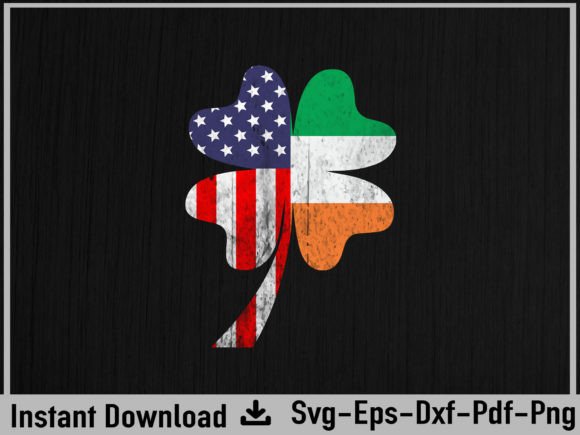
The Irish American Flag Ireland Flag lands with warmth—not flashiness. It blends the vertical tricolor (green, white, orange) with subtle U.S. flag motifs—often through integrated stars, a soft stripe overlay, or a dual-flag silhouette. There’s no forced fusion; it reads as respectful, balanced, and visually grounded. This isn’t cartoonish clipart. It’s a thoughtful graphic design asset that leans into modern design sensibility while honoring cultural symbolism. For clients targeting diaspora communities, heritage retailers, or family-owned pubs, that tone is non-negotiable.
Where It Shines in Real Client Projects
This asset works hardest where emotional resonance meets practical execution:
- Product mockups—especially for t-shirt design, mugs, and tote bags—where its layered color structure holds up across fabric textures and sublimation gradients;
- Social media graphics for Instagram carousels and Pinterest pins, where its strong chromatic contrast ensures visibility even at thumbnail size;
- Printable design collections for crafters: think Cricut projects, sticker sheets, and themed party kits—its clean edges and consistent stroke weight translate flawlessly to vinyl cutting;
- Packaging design accents—used as a foil-stamped detail on kraft gift boxes or as a border element on tea tin labels;
- Editorial design for local event programs or small-run zines celebrating Irish-American history—where it adds visual rhythm without overwhelming text hierarchy.
It also integrates cleanly into Canva templates and Shopify banners—especially when paired with warm serif fonts (like Playfair Display) or friendly sans serifs (Lato, Poppins). I tested it against handwritten and script fonts too: it supports them without competing, thanks to its confident but restrained presence.
Where Caution Is Required
This isn’t a universal plug-in. In minimalist branding systems—say, for a law firm or healthcare startup—it feels tonally mismatched. Its celebratory energy doesn’t align with quiet authority or clinical precision. Likewise, avoid using Irish American Flag Ireland Flag in:
- Small-scale applications like favicon icons or app interface elements—fine details (e.g., star outlines or thin stripe separations) blur or vanish below 64px;
- Crowded layouts with dense typography or photo overlays—its visual weight can disrupt clarity if not given breathing room;
- Low-contrast backgrounds (e.g., light gray on off-white)—always test contrast ratios. I ran it through WebAIM’s checker: passes AA on white, fails on beige unless boosted with a subtle drop shadow or stroke;
- Professional corporate materials where neutrality is expected—this is a creative design asset, not a corporate identity component.
Designer Notes You Can’t Skip Before Client Use
Before dropping this into a live project, I always run these checks:
- Test in black and white—confirm the composition still reads as a unified symbol, not just color noise;
- Preview on both light and dark backgrounds—especially if used in web design or email headers;
- Scale it down to 120px and up to 2000px—verify SVG scalability or PNG sharpness at extremes;
- Drop it onto realistic product mockups—I use Placeit and Smartmockups to assess how it sits on textured cotton, ceramic mugs, or kraft paper;
- Confirm commercial license terms—this is critical for print-on-demand sellers and digital product creators. Does it cover unlimited end products? Resale? Sublimation? Check the fine print before committing to an Etsy product or Shopify collection;
- Inspect transparency—if delivered as a PNG, verify the alpha channel is clean (no fringing or semi-transparent halos);
- Compare font pairings—I found it sings with display fonts (Bebas Neue), grounds script fonts (Dancing Script), and adds warmth to neutral sans serifs (Inter).
Why It Fits the Craft & Digital Product Ecosystem
“Welcome to Digital download St. Patrick’s Day Occasions…” may sound generic—but what makes Irish American Flag Ireland Flag valuable is how it bridges tradition and tooling. It’s not just a clipart file; it’s a commercial design asset built for makers who need speed *and* sincerity. Whether you’re a Cricut user prepping for a farmers’ market booth, a print-on-demand seller building a March-themed catalog, or a blogger curating St. Patrick’s Day Canva templates—this file delivers consistency, cultural nuance, and production-ready flexibility.
For handmade businesses and small business branding, it offers instant recognition without sacrificing originality. And unlike many rushed holiday bundles, it avoids cliché leprechaun tropes—focusing instead on flag language, proportion, and symbolic harmony. That’s rare in the creative marketplace.
Final Verdict: A Polished, Purpose-Built Asset
In my client work, Irish American Flag Ireland Flag earns its place—not as filler, but as a functional, emotionally intelligent design asset. It strengthens visual hierarchy when used intentionally, boosts audience engagement through shared cultural cues, and supports brand consistency across touchpoints. Yes, it requires thoughtful placement and licensing diligence. But for designers building authentic, seasonal, or community-rooted campaigns? It’s a quietly powerful tool—one that turns “St. Patrick’s Day design” from transactional to meaningful.